
Atlas · Region
Giza Plateau
Limestone geometry against open desert sky — Egypt’s most recognisable silhouette, best approached with early light and unhurried pacing.
What this region holds
The plateau is not a single photo stop. It is a layered landscape of Old Kingdom tombs, the Sphinx enclosure, camel tracks at the dune edge, and Cairo’s museum life just across the metropolis.
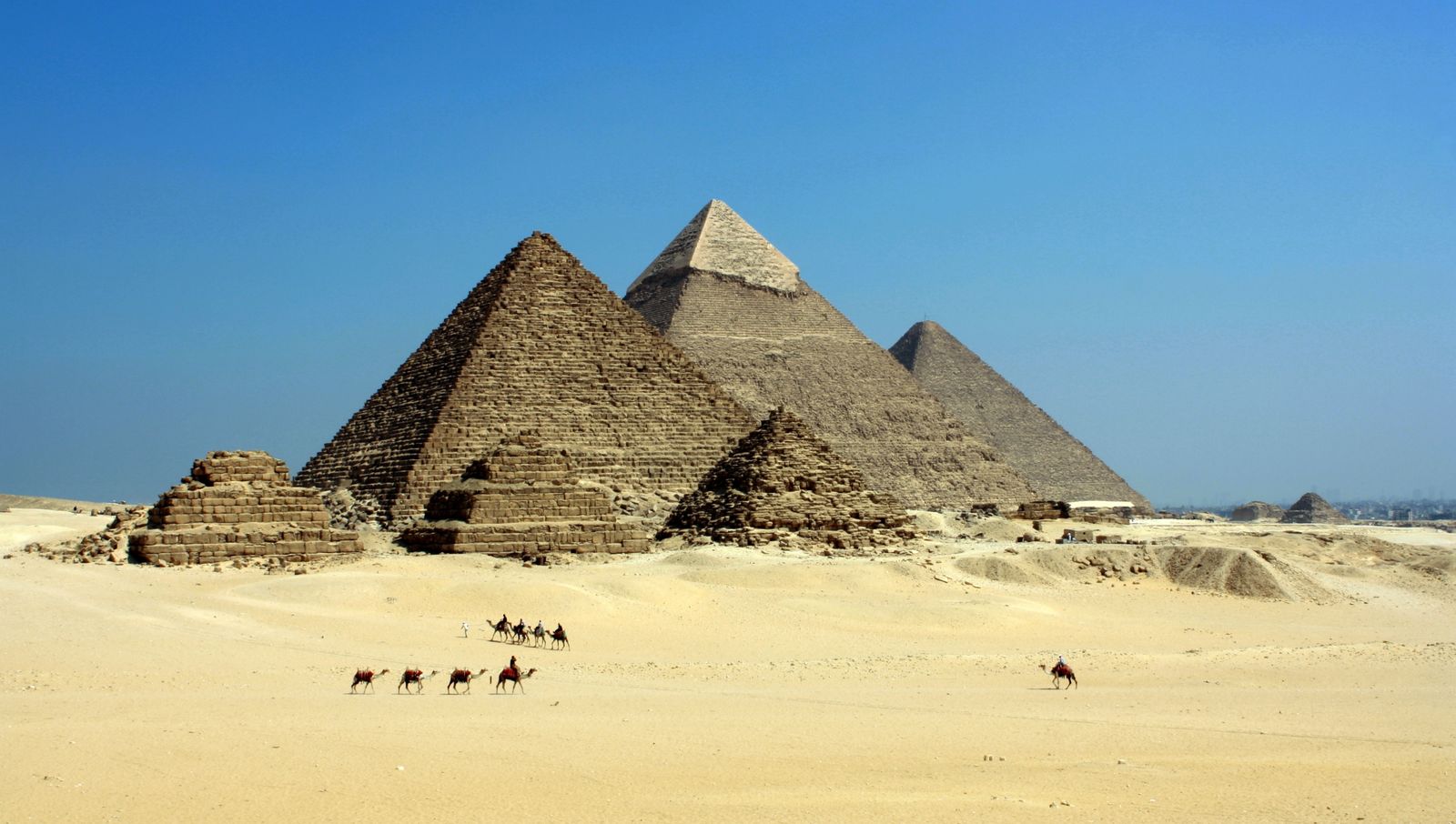
Pyramids, Sphinx, and the city’s cultural spine
- Great Pyramid & companions Walk the perimeter before the heat climbs; note the quarry scars and workers’ village stories that humanise the stone.
- Sphinx enclosure Arrive when shadows are long — the face reads differently in soft side-light.
- Cairo museums Pair plateau mornings with afternoon galleries when outdoor glare peaks.
- Desert fringe viewpoints A short rise west of the main cluster reframes the triad against sand and sky.
Sample day on the plateau
Enter with first tickets
Cooler air, softer crowds, better angles on the eastern faces.
Sphinx & plateau walk
Move slowly; hydrate; save interior pyramid climbs for travellers who want the physical challenge.
Museum or old city lanes
Shift indoors or to shaded districts; return to a west-facing viewpoint only if energy remains.
City dinner, early rest
Plateau days are sensory-heavy — protect the next morning’s Luxor flight or Nile transfer.
Practical field notes
- Footwear Uneven stone and sand — closed shoes beat sandals for long walks.
- Guides Licensed Egyptologists add context; agree scope and price clearly before you begin.
- Photography Midday flattens limestone; dawn and late afternoon keep texture alive.
- Respect These are archaeological sites and workplaces — follow barriers and staff directions.
Pairing suggestion
Two nights in Cairo/Giza before flying or taking the night train toward Theban Shore keeps the plateau from feeling like an airport layover.
Giza FAQ
How many hours should I reserve?
A focused half-day covers the main plateau well. A full day allows museums, slower photography, and a less hurried Sphinx visit.
Is camel riding required?
No. It is optional atmosphere, not a requirement for understanding the site. Walking and a clear viewpoint often serve better.
Can I visit in summer?
Yes, with earlier starts, hats, electrolytes, and indoor afternoons. Consider coastal recovery days after intense plateau heat.